|
IIT Kharagpur Launches Four-Year BTech in Biomedical Engineering: A New Frontier in Healthcare Innovation
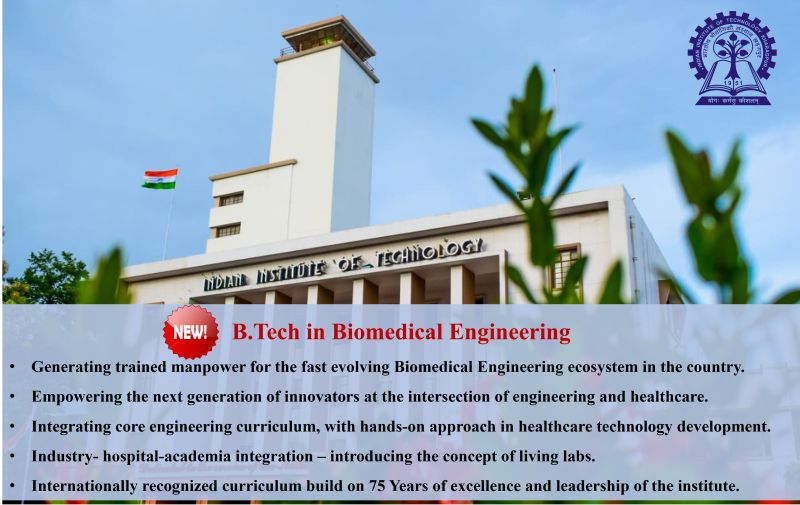
The Indian Institute of Technology Kharagpur continues to redefine interdisciplinary education and deepen its impact at the nexus of engineering and medicine. In a landmark development announced this week, the Institute is launching a four-year Bachelor of Technology programme in Biomedical Engineering—an initiative designed to cultivate engineers fluent not just in core technology, but in clinical understanding and translational impact.
This new undergraduate offering will be administered by the School of Medical Science and Technology (SMST)—soon to be elevated into a full department—underscoring IITKGP’s commitment to building deep expertise at the engineering–medicine interface. Admission for the inaugural cohort of around 25–30 students will be through JEE-Advanced, maintaining the Institute’s rigorous academic standards.
The programme is crafted as a “living laboratory” model, facilitating early and sustained engagement with real clinical environments, industry partners, and healthcare research settings. Students will benefit from hands-on integration with the Dr. B C Roy Institute of Medical Sciences and its super-speciality hospital, gaining exposure to authentic medical challenges from the start.
As Director Prof. Suman Chakraborty has noted, this immersive approach goes beyond conventional classroom education—students will engage with data-driven simulations, surgical practice modules, and disease modelling that mirror real-world healthcare demands.
Biomedical engineering has rapidly matured globally as a field that powers advancements in medical imaging, diagnostics, prosthetics, digital health, and surgical robotics. Yet, most traditional programmes in India remain largely classroom-centric. IITKGP’s new curriculum aims to change that by forging a closer and more systemic collaboration between engineering innovation and clinical practice.
Students will be trained across frontier domains, including:
- Medical devices and robotics
- Biomedical imaging and signal processing
- AI and machine learning in medicine
- Tissue engineering and immunoengineering
- Clinical modelling and simulation
This multidisciplinary training cultivates engineers who are not only technically adept but also attuned to healthcare’s real-time needs—a talent pool critical to India’s growing biotech and healthtech ecosystems.
The Biomedical Engineering programme arrives amid a broader institutional pivot toward healthcare, technology, and societal impact. Over the past year, IITKGP has launched initiatives that reflect this direction, such as a healthcare-focused skills and technology training centre aimed at upskilling rural and semi-urban youth as allied health professionals.

|

The IITKGP Foundation